Unifying an EV Manufacturing Ecosystem
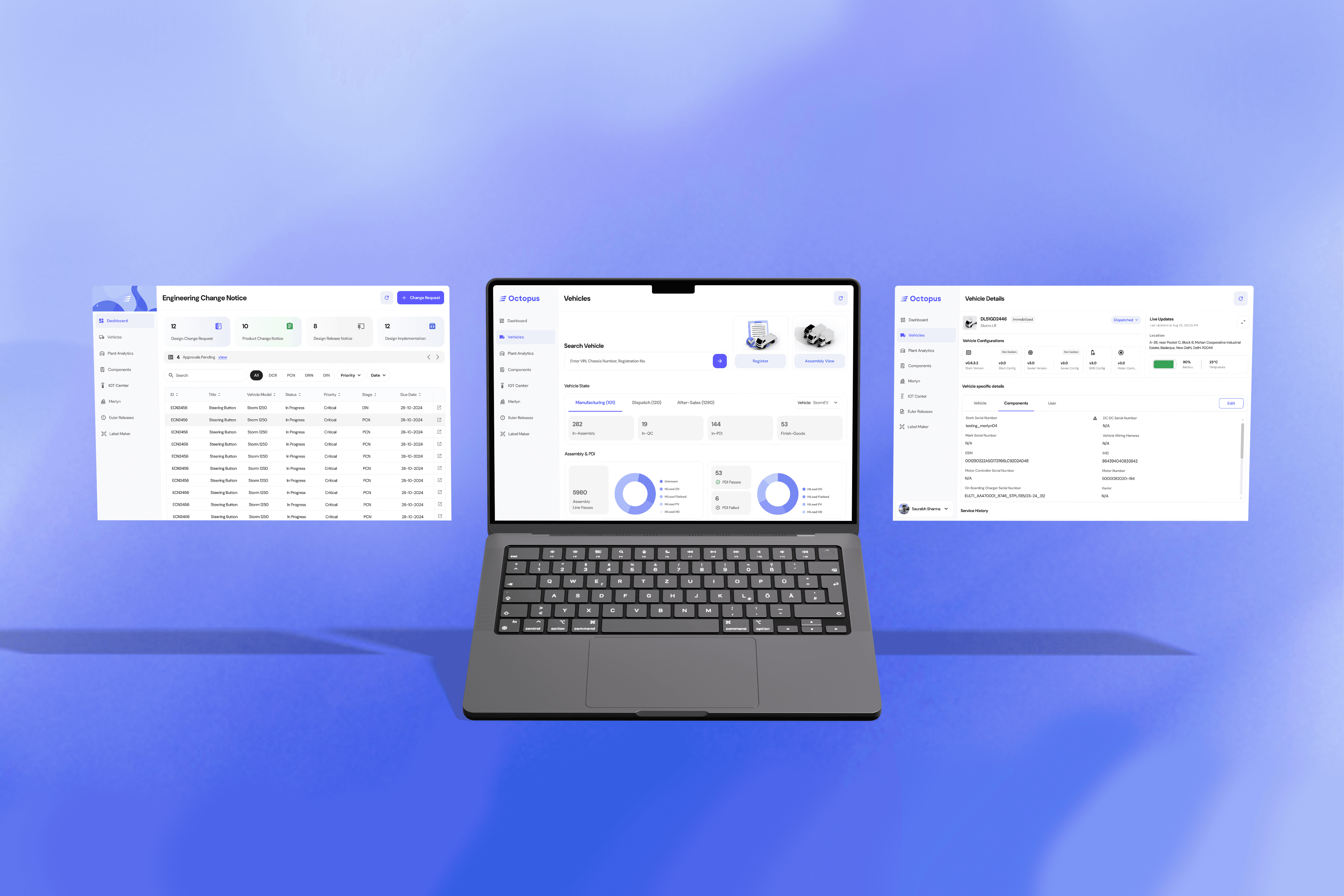
I worked on an internal ecosystem called Octopus at Euler Motors as a Product Designer. My objective was to transform a bloated, legacy internal tool into a fast, intuitive, and scalable platform.
What does Euler do?
Euler Motors is an Indian electric vehicle company dedicated to developing commercial cargo and passenger EVs, with a strong emphasis on advancing technology to drive sustainable mobility.
What is Octopus?
A comprehensive internal platform unifying vehicle lifecycle, component performance, and factory operations into a single traceable system.
Role
Product Designer
Team
Aarush Sinha (Product Manager)
Mukul Dimiri (Design Manager)
Challenge
Before the redesign, Octopus was built purely for function. It reflected how the database was structured, rather than how our employees actually worked. As Euler scaled its commercial EV fleet, this structural mismatch became a massive bottleneck.
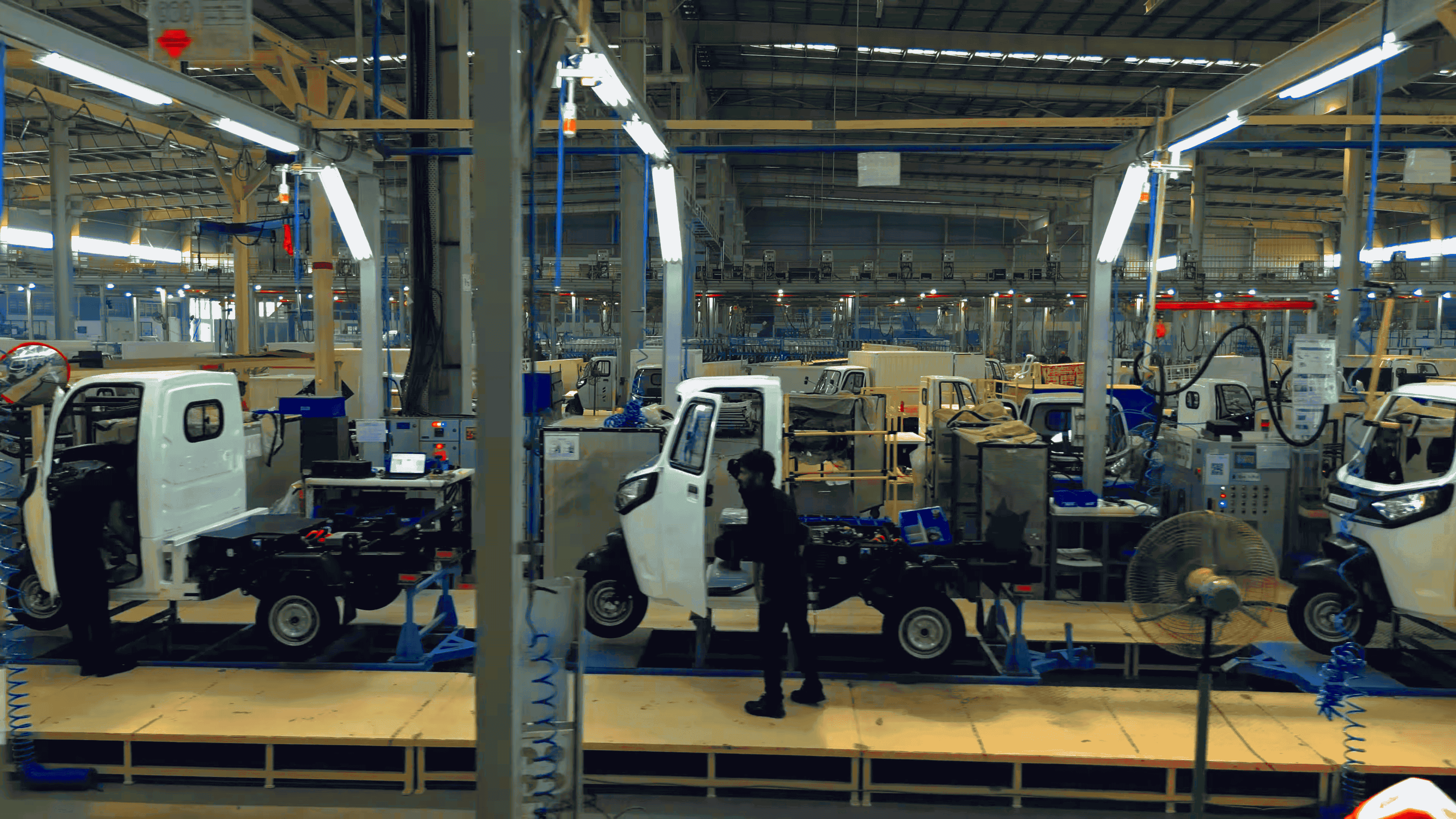
Fragmented data flow
Assembly logs, test results, and service records lived in silos. Finding correlations required pinging developers.
Cluttered UX
High cognitive load. No design standards meant every page looked different, and key actions were buried.
Slow, Outdated interface
Bloated, slow retrieval times, and confusing navigation risked operational errors.
Poor scalability
Unable to handle the complexity of upcoming EV models, IoT integrations, and OTA (Over-the-Air) updates.
Before the redesign, Octopus was built purely for function. It reflected how the database was structured, rather than how our employees actually worked. As Euler scaled its commercial EV fleet, this structural mismatch became a massive bottleneck.

Visual Revamp
The first step was aligning the software with the natural mental maps of the people using it. I spent time observing plant managers and engineers to understand how they instinctively categorized information, using these insights to restructure the platform's architecture.
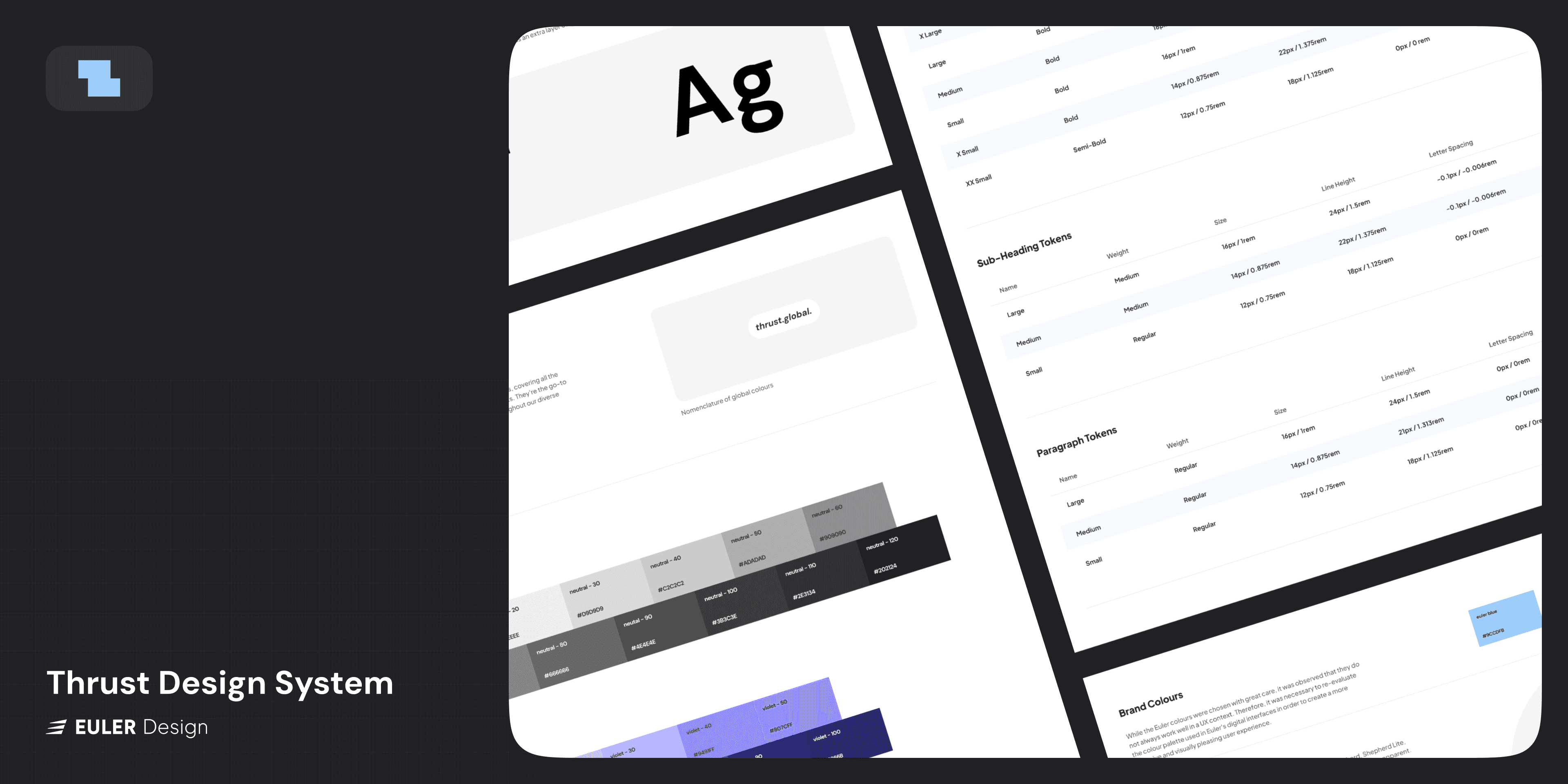
Thrust Design System
The Thrust design system provides the guidelines and components needed to build intuitive interfaces across all Euler applications. By leveraging Thrust, I maintained visual consistency and reduced cognitive load for our users.
I designed a unified Global Dashboard and Vehicle Tracking Pages to surface critical data without overwhelming the user.
We stripped away decorative elements to let the actual vehicle metrics take center stage. Users can digest complex lifecycle tracking at a glance without feeling overwhelmed.
A seamless, unified search experience. From macro assembly-line trends to the micro-details of a single bolt replacement, the information is instantly accessible, reducing the reliance on human memory and scattered spreadsheets.
Managing Technicalities
EVs are essentially computers on wheels. Sending Over-The-Air (OTA) updates to a commercial fleet carries massive risk. I designed a dedicated OTA and Release Management module to bring transparency to hardware/software compatibility.
OTA & Euler Releases
In the Euler Releases compatibility matrix, I relied heavily on immediate visual cues (status indicators, strategic color-coding) so engineers could instantly spot compatibility issues before they had to read a single line of text.
Merlyn
Sometimes the best interface decision is to remove friction entirely. Originally, testing was done on the Octopus browser app. Due to security constraints and workflow interruptions, I advocated to spin this off into a separate, dedicated Windows app called Merlyn. This aligned the tool with the physical environment of the factory floor, rather than forcing a web solution where it didn't belong.
Digitalising the Engineering Change Notice
In manufacturing, changing a single vehicle component triggers a chain reaction across R&D, supply chain, and assembly. Historically, this was done on paper. Documents got lost, there were no clear triggers for the next person to act, and production stalled.
I designed a fully digital, transparent ECN workflow that automated the hand-offs between stages:

I created an overarching ECN Dashboard that nudges behavior. By prioritizing pending actions and making the next steps incredibly clear, we removed the ambiguity that previously caused delays. The system now acts as the enforcer, ensuring no one misses a critical update.
Key Results
60% Faster Approvals
Digitizing the ECN process with automated prompts cut turnaround times from weeks to days.
40% Fewer Support Requests
Empowering employees with self-serve data freed developers to focus on core product features.
100% Traceability
Complete transparency across the vehicle lifecycle ensured audit compliance and reduced decision fatigue.
Zero Paper Anxiety
An automated tracking matrix held the system accountable, ensuring managers never missed critical manufacturing updates.