Designing Fleet Management Ecosystem
I worked on the product design for Shepherd, translating complex vehicle data into an intuitive web and mobile experience for both fleet managers and drivers.
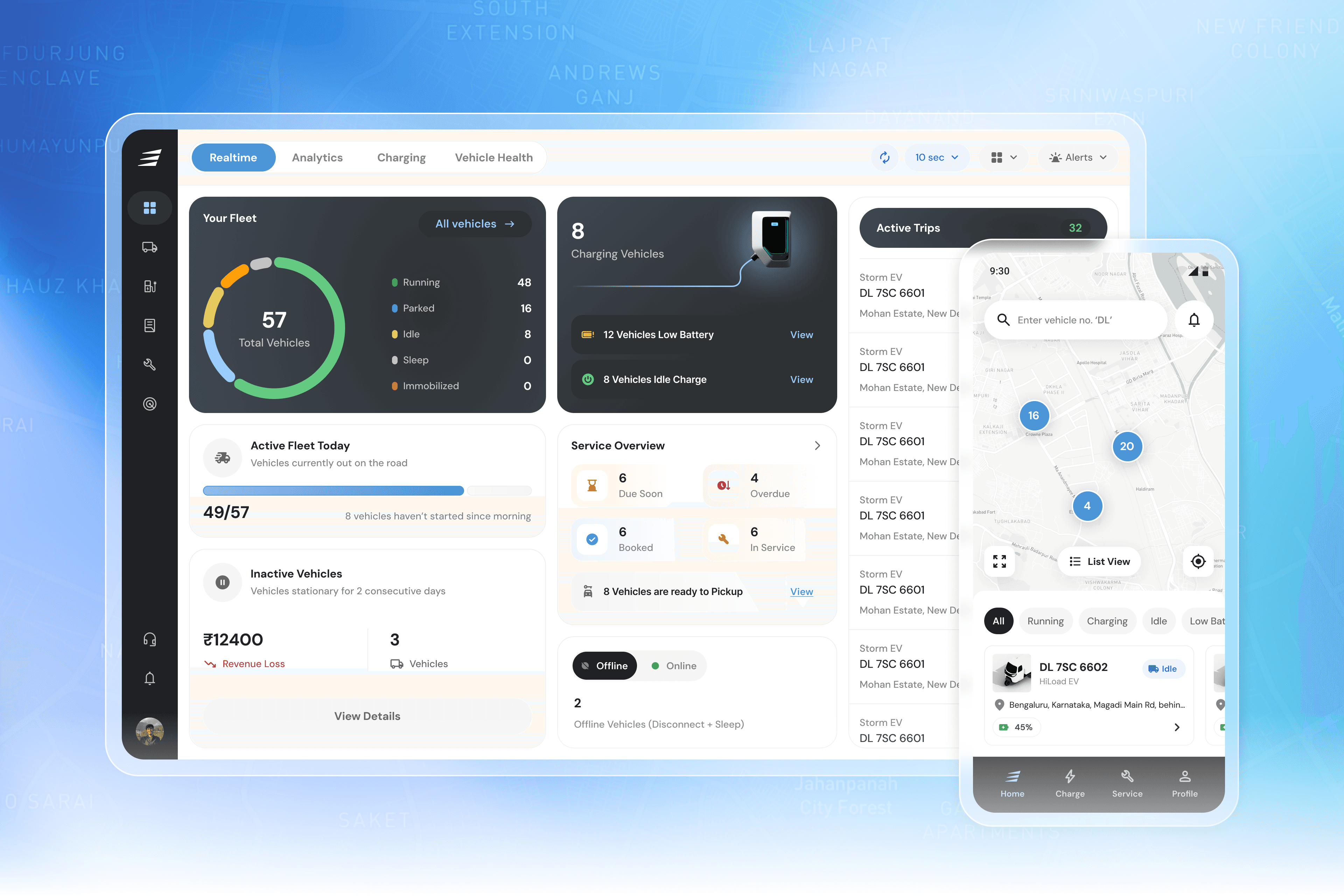
Serving both single-vehicle owners and enterprise fleet managers, the challenge was balancing granular, actionable data for fleets with a simplified, intuitive experience for on-the-ground drivers.

We led the product design, navigating the complex intersection of hardware (VCUs, charging stations) and software to maximize fleet uptime and turn vehicle maintenance into a revenue driver.
What does Euler do?
Euler Motors is an Indian electric vehicle company dedicated to developing commercial cargo and passenger EVs, with a strong emphasis on advancing technology to drive sustainable mobility.
What is Shepherd?
Shepherd is an end-to-end fleet management ecosystem for Euler's EVs, built to serve both single-vehicle owners and enterprise fleet managers.
Role
Product Designer
Team
Ruturaj Patil (Product Manager)
Mukul Dimiri (Design Manager)
Albin Benni (Product Designer)
Challenge
When designing for commercial electric vehicles, the sheer volume of telemetry data—battery health, VCU (Vehicle Control Unit) states, live GPS location, and service history can easily become overwhelming for users.

We had to serve two distinct user groups with entirely different goals on the same platform:
Fleet Managers
Require deep analytics, fleet utilization metrics, and administrative control to optimize efficiency and prevent revenue loss. They need to see the big picture.
Single Owners / Drivers
Require immediate, context-aware actions. Their primary concerns are urgent and on-the-go: "Where is the nearest compatible charger?" and how do I fix my vehicle right now?"
Transforming Maintenance from a Cost Center to a Revenue Drive
Commercial EVs lose money every minute they are off the road. The traditional service center model was causing 4+ hour wait times, costing operators entire workdays. I tackled this by designing two distinct experiences tailored to user mindsets: an emergency response flow (Prime) and a proactive maintenance tracker (Regular).
Prime Service
For sudden breakdowns, we introduced Prime Service, an instant 90-minute doorstep repair ecosystem.
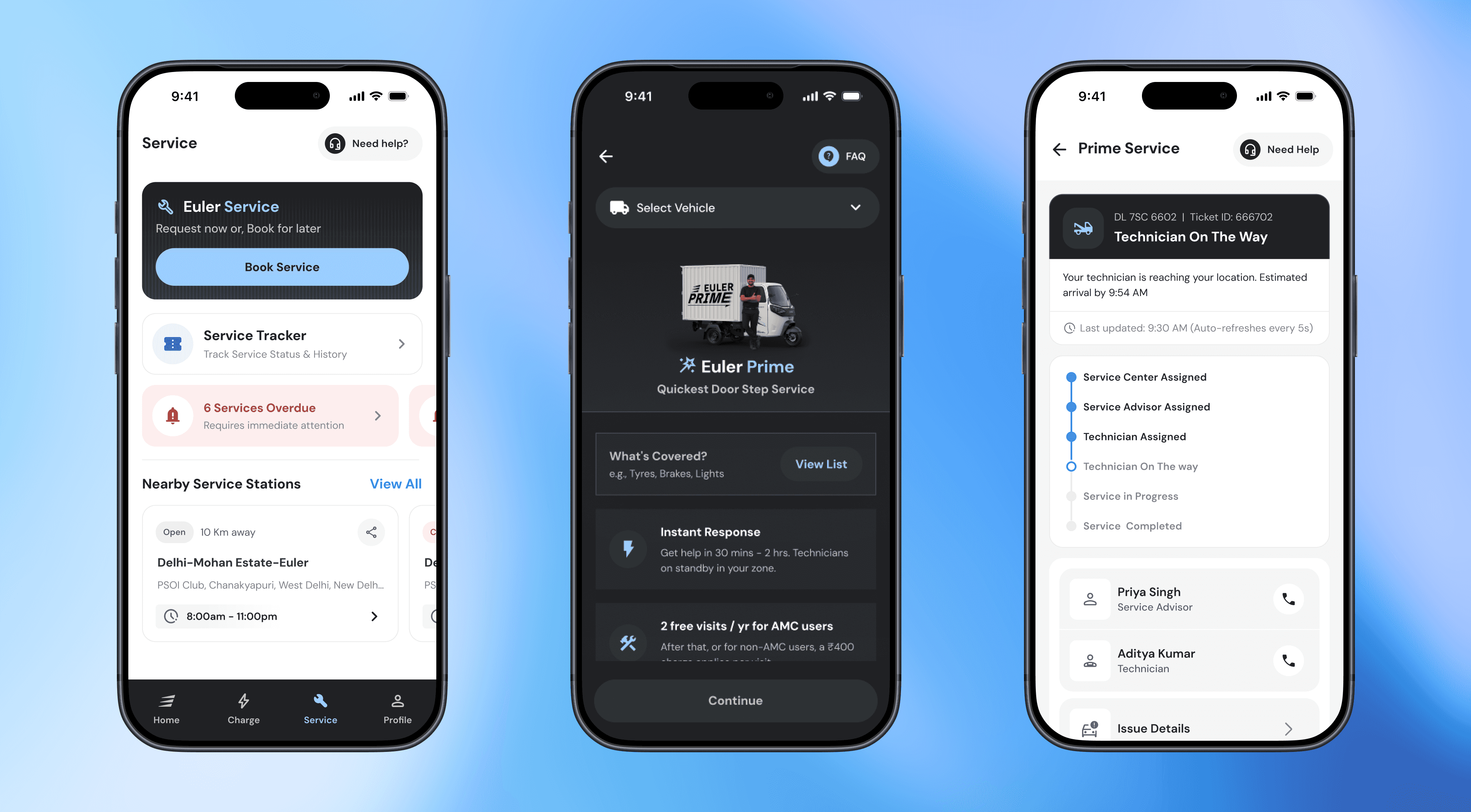
The Edge Cases
In this project, with the happy flow, we had to think about a lot of edge cases and solve thenm
◦ What if the technician delays?
◦ What if a fleet needs simultaneous Prime services for 5 different vehicles?
◦ How do we handle off-hours booking?
◦ What if the on-site fix fails? (Designing the logical pivot to convert a Prime ticket into a Regular Service ticket and initiating towing).
The Service Tracker
For regular, scheduled services, users needed a completely different UI. Instead of emergency interventions, this required long-term tracking.

I designed a state-driven architecture. Instead of creating multiple disjointed pages, the Regular Service component dynamically builds on itself based on the vehicle's real-time status, keeping everything exactly where the user expects it to be.
Impact
Across the platform, average waiting TAT dropped from 207 mins to 58 mins (3.5x faster), giving back ~2.5 hours to operators per visit. Enterprise clients began moving their entire maintenance workflow to Shepherd, projecting an additional ₹5 Lakh/month in GMV.
Bridging the Software-Hardware Gap in EV Charging
Charging an EV isn't like pumping gas. Stations go offline, connector pins are incompatible across variants (3-wheelers vs. 4-wheelers), and hardware glitches cost users actual money.
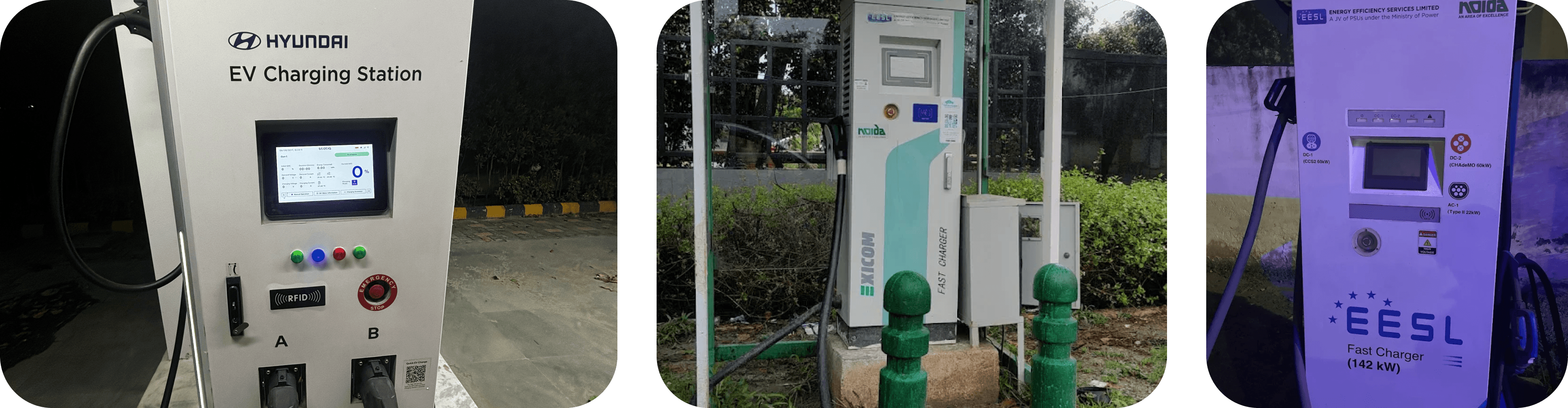
The Pin Compatibility Matrix
Fleet managers were sending drivers to stations, only to find the pins didn't fit.
A contextual filtering system. When users search for chargers, the app asks which vehicle they are driving, cross-references our internal compatibility matrix, and only shows stations with matching, available pins.

The "Ghost Deduction" Hardware Flaw
We discovered a critical edge case during field research: often, the requested charge completes, but a hardware glitch causes the charger to keep drawing power, secretly draining the user's wallet balance.

We needed to design an intervention for it.
We implemented localized push notifications paired with visual instructions on how to manually kill the station switch, immediately stopping the financial bleed for our users.
Designing for Fleet Utilization
While the mobile app is for the driver's quick actions, the Web App is the brain for the Fleet Manager. The core of this was the Realtime Dashboard.

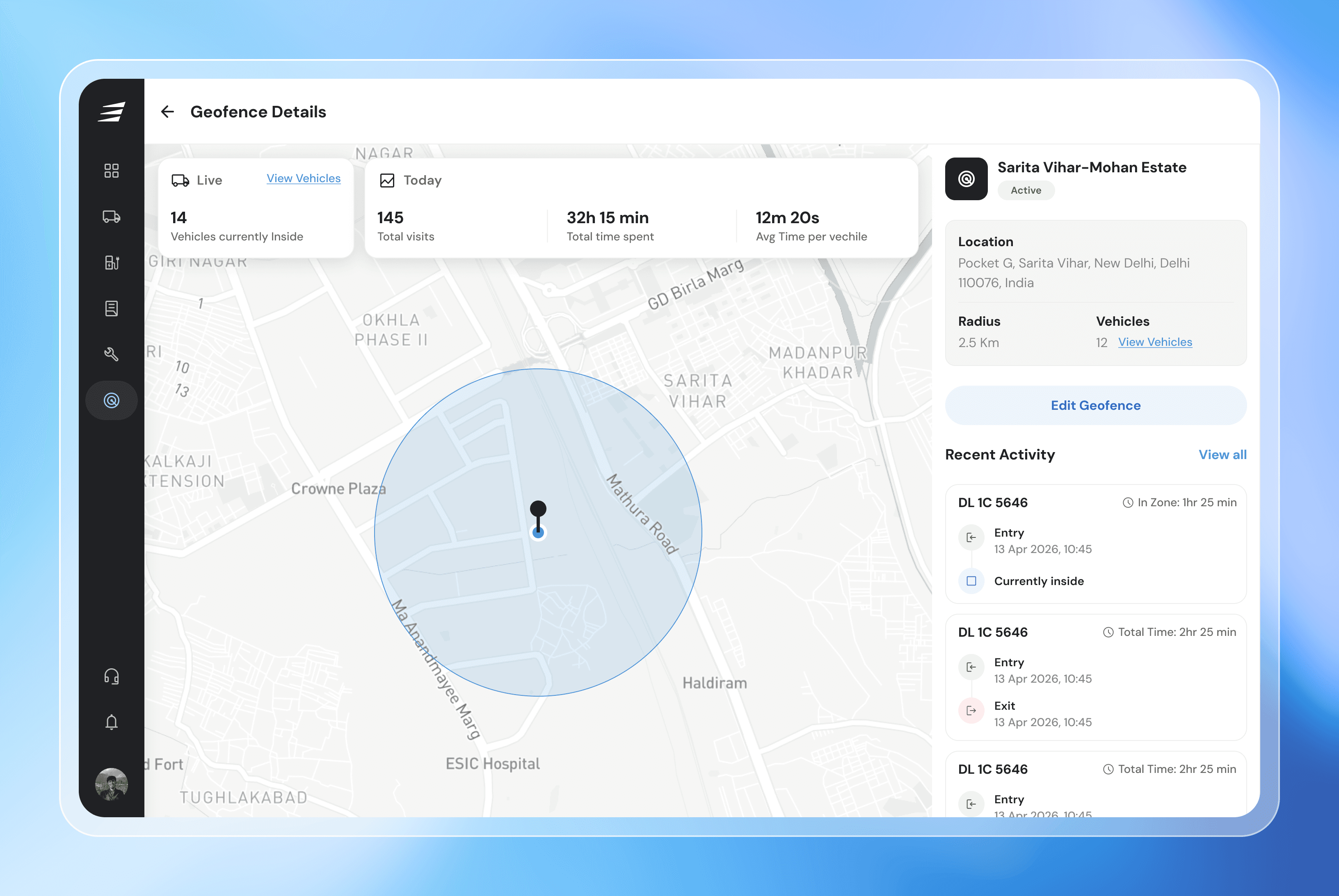
The Geofence
Initially, we designed the Geofence feature strictly geographically—alerting managers if a vehicle left a specific zone.
Feedback
During user interviews, we found managers didn't care if a vehicle left a zone; they cared how long it stayed idle in a loading zone.
The Redesign
We pivoted the entire architecture. We introduced Time Zones, Restricted Hours, and Duration-based alerts.
Impact
By allowing duration-based geofences, many of our enterprise logistics partners tracked drivers lingering at major e-commerce loading hubs.
They identified the bottleneck and reduced Turnaround Time by 30 minutes per visit, preventing late-delivery penalties and drastically improving fleet efficiency. Geofence feature usage shot up 12% MoM.
Design System & Component Architecture
We made sure about maintaining consistency across Android and Web for hundreds of screens.
A key example is the "Vehicle Selector" bottom sheet. Whether a user is booking a service, setting a geofence, or generating a trip report, this component behaves exactly the same way, drastically reducing cognitive load.

Impact
3.5x
Faster Service Turnaround Time
₹10.5L +
Monthly Serice GMV Generated
64%
Increase in remote vehicles commands (MoM)
18.5%
Improvement in on-time service adherence

